7 Professional Payment Reminder Email Templates (That Actually Get Responses)
Staring at an unpaid invoice is awkward. You’ve done the work, delivered the value, and now… silence. A vague anxiety starts to creep in. Did they simply forget? Is the email lost in spam? Or worse—are they ghosting you avoiding payment deliberately?
You’re not alone in this anxiety. Studies show that nearly 50% of freelance invoices are paid late. The hesitation to send a follow-up email often comes from a fear of looking desperate or ruining the client relationship.
But here is the truth: Professionalism is not about waiting silently; it’s about communicating clearly.
A timely, well-crafted payment reminder doesn't just get you paid—it actually builds respect. The key is in the timing and the tone. Below, you’ll find battle-tested email templates that professionalize your collections process, completely removing the awkwardness from the equation.
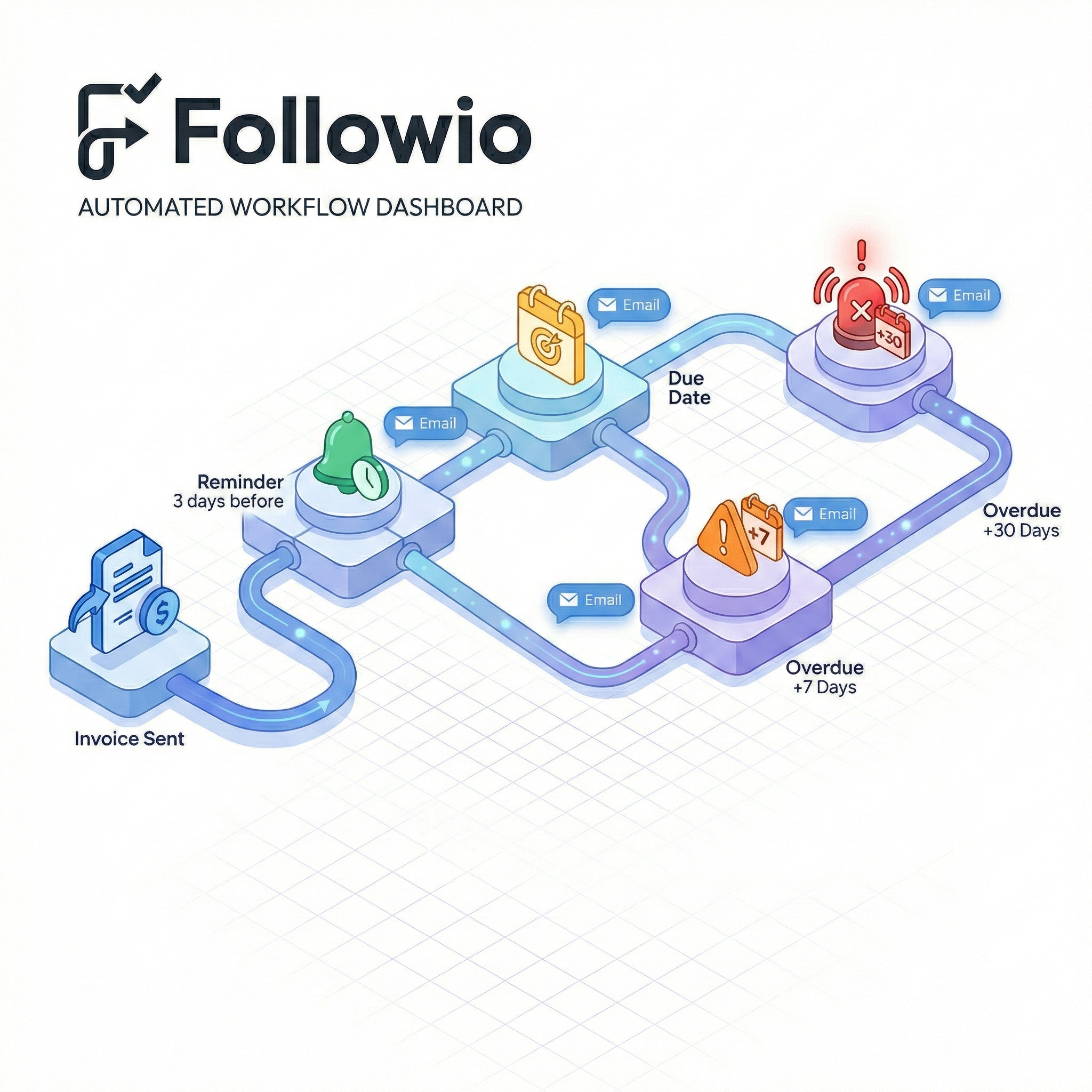
Followio's recommended timeline for securing payments without losing clients.
The Perfect Payment Follow-Up Timeline
When is the Right Time to Send a Payment Reminder?
The "wait and see" approach is the enemy of cash flow. Data suggests that the probability of collecting an invoice drops by 10% for every week it goes unpaid.
The Ideal Follow-Up Schedule
Instead of guessing, use this standard professional cadence:
- The "Pre-minder" (3 days before): A courtesy heads-up to ensure administrative hurdles are cleared.
- The "Oops" (1-3 days late): Assuming it's an honest mistake or email burial.
- The "Just in Case" (1 week late): Bumping it to the top of their inbox with slight urgency.
- The "Serious" (2 weeks late): Asking for a definitive payment date.
Copy-and-Paste Payment Reminder Templates
1. The "Pre-minder" (3 Days Before Due Date)
2. The "Friendly Nudge" (1-3 Days Overdue)
3. The "Relationship Builder" (Weekly Follow-up)
4. The "Direct Follow-Up" (7-10 Days Overdue)
5. The "Firm Notice" (14-21 Days Overdue)
6. The "Final Demand" (30+ Days Overdue)
Disclaimer: These templates are provided for informational purposes only and do not constitute legal advice. Please consult with a legal professional before taking strict legal action against a client.
Is manually chasing clients draining your energy?
You didn't become a freelancer to be a debt collector. Let automation handle the awkward conversations for you.
Strategies to Avoid Unpaid Invoices in the Future
It’s basically a law of physics: It is infinitely better to prevent late payments than to chase them. Here are two massive leverage points:
1. Make Payment Frictionless
If your client has to print a PDF, cut a physical check, buy a stamp, and walk to a mailbox, you will be the last person they pay.
Modern commerce demands speed. Ensure your invoices have a direct "Pay Now" button that accepts Credit Cards or Bank Transfers immediately. The harder it is to pay you, the longer you will wait.
2. Automate Your Follow-Ups (The Professional Way)
Manually tracking dates in a spreadsheet and feeling awkward about hitting "send" is a waste of your creative energy.
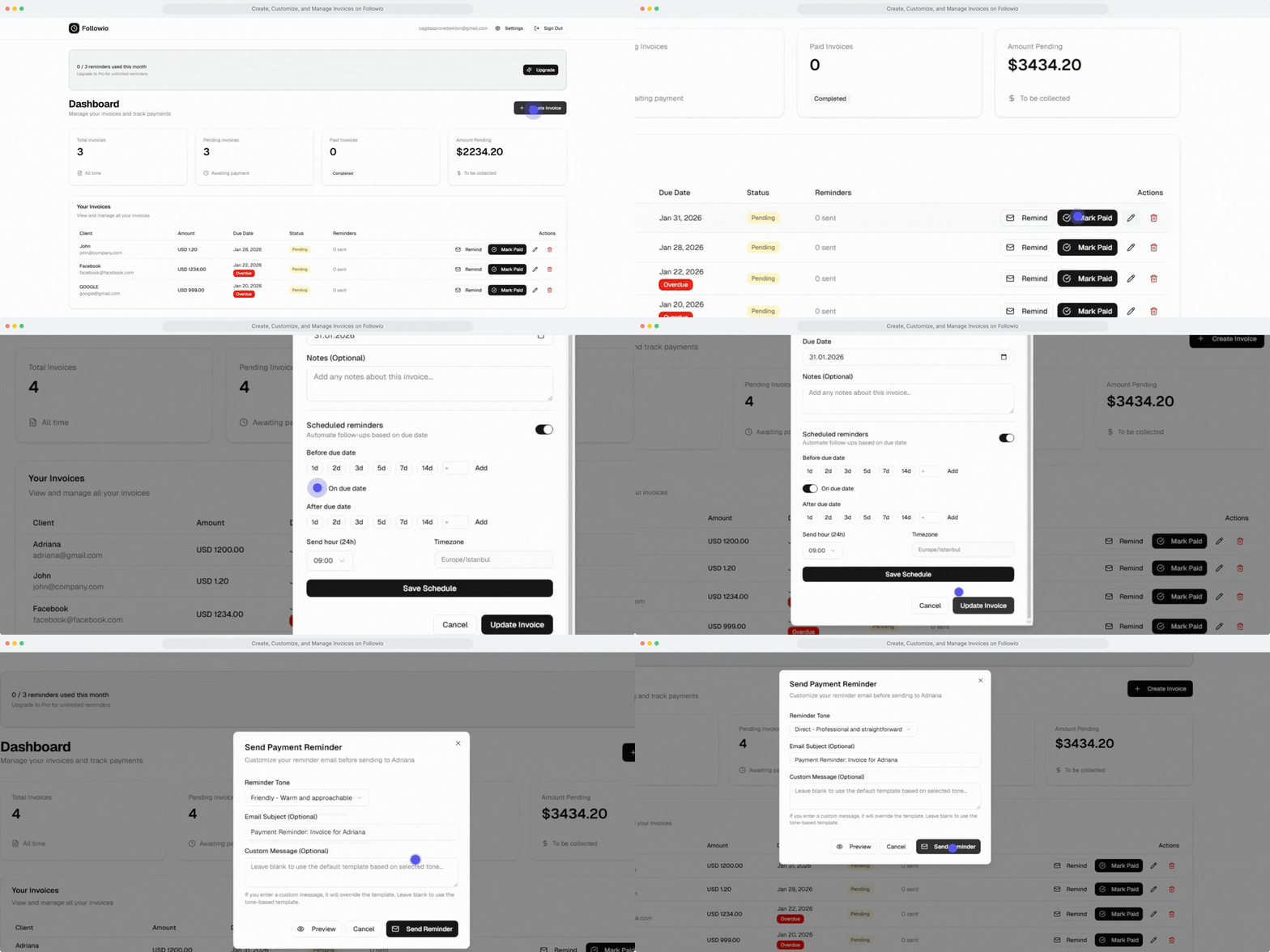
Followio acts as your professional billing department. It detects when an invoice is due and sends a personalized, polite sequence automatically. It stops exactly when you get paid. You don't have to lift a finger—or feel awkward—ever again.
Meet Your New Billing Assistant
Followio allows you to set up your perfect email sequence once, and it runs forever. Get paid 2x faster without the headache.
Frequently Asked Questions
Keep it short, professional, and assume it was a mistake. Avoid accusatory language like 'You failed to pay.' Instead, use phrases like 'Just floating this to the top of your inbox' or 'Wanted to ensure you received the previous email.' Focus on the solution (getting paid), not the problem (they are late).
Absolutely not. It is a standard business practice. In fact, many finance teams rely on reminders to prioritize their weekly payouts. Sending a reminder shows you run a professional operation and value your own time.
Clarity wins over cleverness. Use specific details to get attention. Good examples: 'Follow up: Invoice #1234', 'Payment Reminder: [Project Name]', or for urgent cases: 'Overdue: Invoice #1234 - Action Required'. Avoid vague subjects like 'Hi' or 'Question'.
A standard cadence is: 3 days before due date (courtesy), 1-3 days after (friendly), 7 days after (direct), 14 days after (firm), and 30 days after (final notice). Consistency is key.
If an invoice remains unpaid after 30-60 days, you can consider sending a formal demand letter, hiring a debt collection agency, or filing a claim in small claims court depending on the amount owed. Always ensure you have a signed contract and proof of work delivered.
Read more on the blog: